Historical
“A maid. A man needs a maid,” is stated by songwriter Neil Young and starts an article placed in the Bates Student on March 21, 1986 regarding student’s support of maid service.
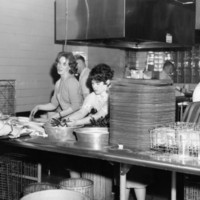
The maid service at Bates College started along with the college in 1855, with about forty-two women employed yearly by the Maintenance Department. These women were asked to take care of waste receptacles, vacuuming, dusting, delivering clean linens and other duties in which kept the dorms clean. Bernard Carpenter, the treasurer and vice president for business affairs, stated that the maid service existed for two reasons; one reason being that students should have a clean and ‘quality’ work space and the second reason being that the buildings have been invested in and therefore they should be taken good care of.
These women were apart of the French-Canadian population of Lewiston-Auburn and most of them became apart of the Bates community after the closings of the shoe stores and mills. Upon their arrival, the women became infatuated with Bates. They were offered some of the best benefits; paid vacation hours, paid sick hours, annual raise of four to six percent, medical coverage, a retirement program and a disability program. Working conditions at Bates surpassed the ones they had grown accustomed to at the mills.
But something else that drew them to love their jobs, were the students. They enjoyed the daily interactions with them and the students did as well. Some would go above and beyond their job titles, assisting students in recuperating after being sick. Jean Gervais, the maid in Hayes House, would go to the extent of making her homemade fudge for St. Patrick’s day or cherry cheesecake for Valentine’s day.
Although these women became a mother figure to students, there necessity became questionable as the rise for tuition. Students felt they could be held responsible of cleaning after themselves if that meant their tuition would be unaffected, and these women should have their duties reduced to bare necessity of the students including, the bathroom. (Crawley, 1986)
The maid service was eliminated some years following, but is not accessibly documented, and the cleaning of the dorms were reduced to the cleaning of the building excluding individual rooms. This also eliminated the extent to which the students were involved with workers, diminishing relationships that were once very personal.
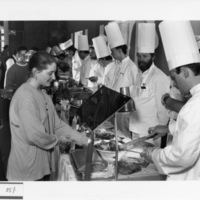
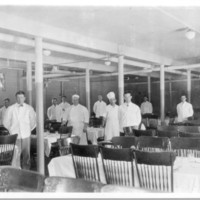
What was once a cherished relationship between staff and student, soon turned into a policy that no longer allowed dining and maintenance staff member allowed to eat in the den for their limited break times nor are they allowed to eat their meals when the students are eating their meals. Prior to this new policy, which took into affect September 1991, staff members would be often seen spending there time socializing with the students and starting conversations with them.
Clare Greenlaw Class of ’92, wrote an article in the Bates Student Sept. 13, 1991 edition titled New Den, Seating Policy Unfair to Staff, students, voiced her disapproval with the new seating arrangement. She brings up the issue that it was only maintenance workers that were not allowed to eat with students, however, library employees, and professors were. Deeply stricken by this new policy, Clare goes on to write” Will Bates maintenance people not be allowed to socialize with us and broaden our perspectives of the world, too? To me this symbolizes the loss of one of the most critical elements involved in Bates’ success as a college: the open expose and free exchange between students and all members of Bates’ staff” (Bates Student).
On Friday, October 8th, 1993 a forum article written from staff members in appall of seating policy voiced their frustration. Stating that the vice president of business affairs, Jim Weston encouraged the custodial staff to eat lunch in their personal space of the buildings in which they cleaned, or preferably to leave the building to eat. 500 maintenance workers signed a petition that wanted to remove the eating policy, and speaking French ban.