
Critical Narrative
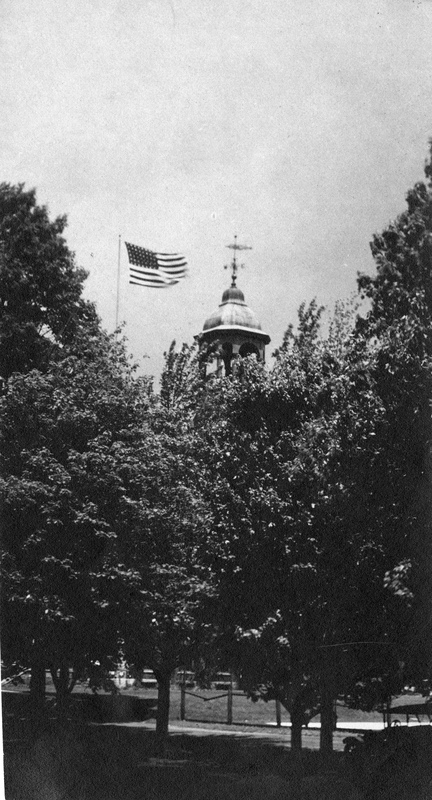
Critical Review:
Critically evaluating Hathorn’s Bell requires the understanding of its role in the everyday life of Bates College as well as the symbolic values it possesses which are not easily identified. A Freudian psychoanalytic approach recognizes and aims to identify the often unrecognizable hidden meanings associated with an object. Sigmund Freud stated that there were three levels of the human psyche which are conscious, preconscious, and unconscious each of which vary in their accessibility to the human mind (Berger 28). Arthur Asa Berger, in his book What Objects Mean, suggests that objects can be interpreted using these same levels as Freud offered in his topographic hypothesis. Consciousness can be identified as the obvious function that we identify with the object, precociousness as the meaning of an object that we recognize but not easily identify, and unconsciousness as the unrecognized information an object possesses (Berger 28). Hathorn’s Bell can be analyzed through this approach using the conscious level to explain its basic purpose, the preconscious level to discuss other forms of its functionality, and the unconscious level to explore its deeper significance to Bates College and its inhabitants. The unconscious level is the most prominent of the analysis as it reveals the symbolism the bell possesses and the individual emotional response it evokes when it rings.

Conscious:
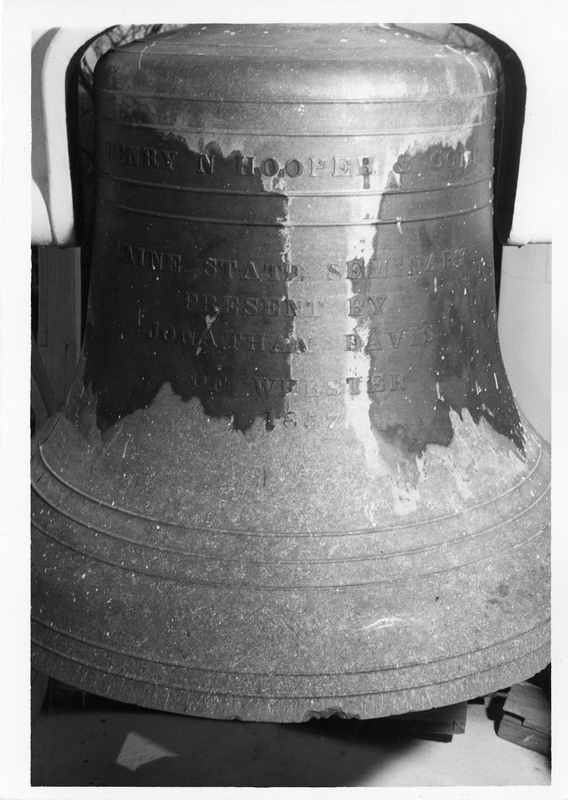
The conscious level of an object is the first and easiest deduction made when performing a psychoanalytic analysis. It represents the tip of the iceberg regarding the three psyches with the visible underwater portion of the iceberg denoting the precociousness of an object and the unconsciousness representing the largest and unseen portion (Berger 28). Hathorn’s Bell officially begins and ends class periods when it rings, and also chimes during special occasions including after a victory by the football team. Its purpose is to produce a large and amplified ringing sound meant for the entire campus to hear marking the conclusion of a class period or the beginning of the next. Its location on top of Hathorn marks the highest accessible point on the Bates campus which helps to increase the range where it can be heard. The bell has resided on top of Hathorn since being donated in 1857 only two years after the formation of Bates College. Its ring has become a fixture at Bates College since its establishment and continues to serve its basic purpose daily.
Preconscious:
The preconscious aspect of the bell contains its other purposes and functions which are not easily seen. Apart from its obvious role of ringing upon the start and conclusion of class periods the bell has multiple functions that for the most part are unrecognized. These functions include the ability to keep time and organize the school day. It also provides structure and has the power to maintain order and regulate the members of the Bates community. What is unrecognizable about these observations is that students and faculty alike blindly adhere to the bell only waiting for its sound and never understanding its significance. Yet the ringing causes any pre class socializing to cease and interrupts any last minute lecturing by a Professor signifying its influence. With its loud and wide ranging ring the bell can be heard across campus capturing the attention of the entire college. When the bell rings for reasons other than maintaining the structure of the school day students and faculty alike are immediately aware that something significant has or is taking place. By capturing the attention of the entire campus within seconds the bell’s power is very evident despite the fact that the realization is not often made that this This relates to another function of the bell which is to provide unification to Bates. The reliance on the bell has long been outdated since its arrival in 1857 due to the increase in technology and advances in scheduling. Classes no longer need to hear the echoing on top of Hathorn to know the period is over but it has and will remain a prominent feature on campus. It will continue to perform its purpose because it creates unity within the campus as it begins and ends all classes the same way an alarm clock would start and finish a single class. Though its influence is often overlooked Hathorn’s Bell will continue to structure and regulate while unifying the Bates community.

Unconscious
Resting at the heart of Bates Campus is a majestic building that dates back to the founding of our beloved Bates College, Hathorn Hall. Although this magnificently breathtaking brick building, bastioned by Corinthian columns, is found at the center of campus most people pass by without a glance or second thought. Little do people know that atop that building rests the most symbolic figure at Bates, Hathorns Bell. Professors and students alike here the bell and know that it signifies the beginning and ending of classes. How do we know that this is what it signifies? The answer to this question seems quite simple at first, because it’s always been this way. But as we remove ourselves and examine how our brains analyze certain stimuli it becomes clear that we inherently pick up on subliminal messages and react to them how we were always taught to do.
As Berger states, “The important things to recognize is that it is our unconscious, Freudian psychoanalytic theorists argue, that profoundly shapes our behavior”( Berger 28) Freud believes that the unconscious mind was what shaped our behavior, overruling both consciousness and precociousness. When we react to environmental stimuli, such as a car horn, we immediately turn to see what the noise was. Why do we turn to look at this noise? It is because we learned that a car horn is made to alert people, whether to avoid danger or say hello but it was designed with that purpose in mind. Without even processing this sound in our minds there is already a predisposed ideal behind that object that warns us to be wary of that object. (Berger 29) From grade school to high school bells are used to signify change. This ideology of change is triggered subliminally in the human psyche by bells without students ever questioning it. Students and faculty never question hearing Hathorns Bell when it chimes throughout the day, but if it were to suddenly stop chiming one day people would know something was wrong. The absence of this material object speaks volumes about what we unconsciously recognize as symbolic meanings to everyday artifacts, that when unexamined go unnoticed.

Charles Brenner an American psychoanalyst describes a structural theory pertaining to the id, ego and superego in his book An Elementary Textbook of Psychoanalysis, “We may say that the id comprises the psychic representatives of the drives, the ego consists of those functions which have to do with the individual’s relation to his environment, and the superego comprises the moral precepts of our minds as well as our ideal aspiration.” Hathorn's Bell addresses students ids, egos, and superegos more than one thinks. Berger discusses how the ego employs certain defense mechanisms to help suppress and control the id and superego.( Berger 32) Unconsciously when a Bates student is cramming last minute for a test or finishing up a test he or she is often anxious. The reason they feel this anxiety is because once they hear Hathorns Bell chime they know the test they are about to face is imminent. Among the defense mechanisms triggered unconsciously within the students mind are avoidance, denial, and suppression.
Avoidance is the refusal to face matters that distress us.(Berger 32) So when a student is cramming last minute for a test or finishing one he tends to start feeling distress knowing time is running out. Although there is no reason for this student to feel nervous his unconscious is relaying a message to his body that it is under distress, which in turn creates physical anxiety. Even though there is no physical danger resulting in not finishing the test on time. This anxiety in tern leads to other defense mechanisms such as denial and suppression, both instruments created from anxiety to help put this sudden nervousness to rest. The stimulus that is at the forefront of triggering these mechanisms is the chime of Hathorns Bell. Knowing subliminally that when the bell rings you, as students are about to put the knowledge in your brain to its ultimate use is somewhat nerve racking. So much so that people have been known to develop testophobia; a irrational fear of taking tests that differs from usual anxiety one feels about taking tests, side effects may be full-blown panic attacks and nausea. (http://www.phobiasource.com) this may seem farfetched but as Berger mentions, many objects of material culture can provoke hidden unconscious reactions that people have no idea exist in their psyche. (Berger 32) This is why many students not just at Bates but also around the country have anxiety when they are waiting for the bell to sound to start and exam, especially if this exam is one for an entrance into a dream institution or a licensing exam.