
The History of Bates Women's Athletics and Apparel
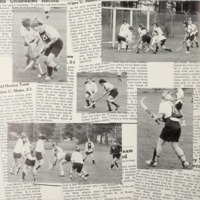
Female athletic attire is highly correlated with the priority and equality of the way female athletes are treated and regarded in a collegiate atmosphere. In the 1920s, females and males at Bates College were very separated, and female athletics were not highly regarded; all of the focus on athletics was on the men. Women attended physical education classes that were not very strenuous compared to the sports men were participating in. Their gym uniforms at the time were a physical reflection of this discrepancy. They were very constricting and intended to make a woman look proper while exercising.
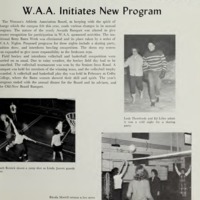
As years have progressed, female athletics as well as what women wear have evolved. In 1937, the Bates Women’s Athletic Association (WAA) established a motto: “A Sport for every girl and a girl for every sport.” This motto is an expression of the evolving philosophy on female physical education. It shows the gradual advancement towards modern female athletics. The Women’s Athletic Association “searches out the forgotten woman of sports, the ordinary girl, the inexperienced girl, in order to initiate her into the joys and benefits of healthful physical activity” (Bates Mirror 1937). At this time, each girl wears either black or garnet and participates in intra-collegiate play. There is a strenuous, medium, and light sport in each season giving each girl an opportunity to participate. At the end of each season, a female athlete is awarded a “B sweatshirt” on the basis of good sportsmanship, ability, and 75 posture. It symbolizes worthy achievement in women’s athletics and something for the women to strive towards. The Women’s Athletic Association (WAA) and the B sweatshirt promote the interest and positive participation of females in athletics in cooperation with the Physical Education Department at Bates. The B sweatshirt award is a step toward equality in that females get awarded something similar to what male athletes wear and are recognized for their involvement and dedication to athletics. Today, almost all female athletes wear sweatshirts and are even likely take them for granted, but back then it was such a privilege to be awarded such an article of clothing. The way female athletes regard sweatshirts back then compared to present day is highly representative of the evolved equality that exists today; only highly qualified female athletes received sweatshirts back then, but today, all female athletes regardless of ability are issued sweatshirts.
However, despite the progression of female athletics due to the Bates Women’s Athletic Association, women are not at all recognized and respected the same way that men are throughout over half of the 1900s. They still live in separated dorms, and are required to get 8 hours of sleep every night and take a cool shower every morning. They are very much under the control of the school and do not have as much freedom as men.
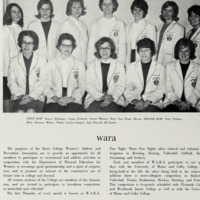
The Bates Mirror 1964 represents a vast difference from the yearbooks from earlier years just described. The WAA is fostering far more recognition for female athletes than in previous years. In the next few years, progress is expedited as compared to the slow progress made during the first part of the 20th century. The transition from the Women’s Athletic Association (WAA) to the Women’s Athletic and Recreation Association (WARA) is highly significant in that intercollegiate competitions for women begin. Women still participate in sports in cooperation with the physical education department, but twice a year, they have competitions against U Maine and Colby. Intercollegiate competition also involves Plymouth College, and Westbrook Junior College. In 1967, there is a record of the first Bates women’s varsity team: the field hockey team.
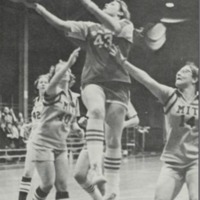
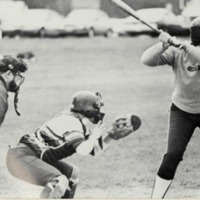
The 1971 yearbook shows even more recognition of female athletics. The female uniforms are beginning to look more like that of the men’s uniforms. They are representing Bates with the attire they are wearing. Contrastingly, in years prior, they wore only garnet and black clothes and played against each other, and in 1971 they are pictured wearing official Bates uniforms similar to the men’s. Females are provided with competitive opportunities to contest against other schools and are able to carry the same pride as the men do by wearing the uniform and representing their school. The attire is evolving simultaneously with the female athletic department.
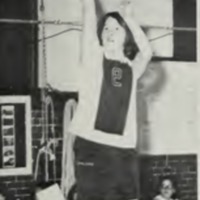
The Bates yearbooks are surprisingly very inconsistent in displaying female athletics. Some years, it seems that women are being fully recognized, but other years, it seems that men dominate. For example, the 1976 yearbook is highly emphasized on men’s athletics, yet the 1968 yearbook showed a lot on the women. In 1977, a female volleyball player is photographed wearing a zip up sweatshirt that is very similar to what men wear. The basketball girls wear shorts that are very short. The athletics seem to be getting more and more competitive in the female realm.
After 1977, the yearbooks get more consistent in documenting female and male sports equally. Many are formatted in such a way that both men and women get their own page for each sport, which is far more than women were previously recognized in athletics. In 1977, a special statement is written about a female field hockey player which is very significant.
It is very possible that the rapidly evolving recognition of female athletes documented by the yearbooks in the 1970s is correlated with Title IX. Title IX is a law that was passed in 1972 that “requires gender equity for boys and girls in every educational program that receives federal funding” with a vast emphasis on athletics. Before Title IX, the primary physical activity for women was cheerleading and physical education class, and female college athletes only received two percent of overall athletic budgets. Since Title IX, there has been an exponential growth in the number of women who participate in collegiate sports as well as far more opportunities for them to compete competitively (titleix.info). The fact that the law was passed in 1972 seems to be very correlated with the Bates yearbooks regarding female participation in athletics and the recognition that they receive.
Despite the tremendous progress in female athletics towards gender equality, particularly due to Title IX, female athletics were still not fully equal to male athletics throughout the 1980s and earlier 1990s. The gray Bates College Athletics sweatshirt is a good representation of the shift toward a gender neutral athletic program.Although the first sighting of the gray Bates Athletic sweatshirt occurs in the 1973 Bates Mirror it is not until 1987 that the seemingly unifying object appears on a female athlete as well. This gray sweatshirt is commonly known to Batesies as “the graycido”. This object brings to light the equality between men’s and women’s sports because it is the first article of clothing that is worn by both men and women school-wide in every sport.
The actual date of the issuing of the gray sweatshirts is unknown, but since it was absent in yearbooks up until 1973 it is inferred that they were not worn until the early 1970s. Since women were pictured in the yearbooks wearing the sweatshirts in 1987, they have become more and more common and are still issued to all sports teams today. Particularly from 1995 on, the gray sweatshirts become very prevalent in yearbooks, both for female and male students. Both women and men are issued these grey sweatshirts, representing large progress towards equality in the Bates athletic community. The “graycido” seems to be the first article of clothing that is identical in both female and male athletes making it an object that symbolizes gender equality in the Bates Athletics Department.
References
Bates College.The Mirror. 1937-2013 yearbooks
"History." TitleIX.info. The MARGARET Fund of NWL, 2013. Web. 14 Nov. 2013.