
From Past to Present: The Evocative Narrative
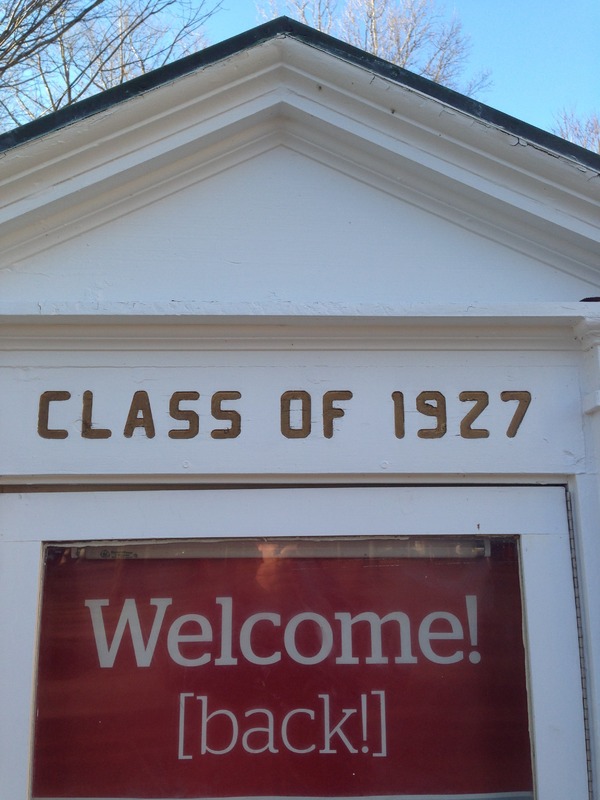
In “Evocative Objects: Things We Think With” by Sherry Turkle, the author describes human relationships with objects that we find “uncanny”. The author mentions Freud’s definition of uncanny as “known of old yet unfamiliar” (Turkle, 8). This definition of uncanny is how we would describe the Mouthpiece of Bates College. Better known as simply the bulletin board outside of Hathorn Hall, the Mouthpiece is an object that we can use to study the history of Bates College.
The Mouthpiece struck our group as an uncanny object because of how many times that it has been seen, but very few people know its purpose or its history. The reason that it is always seen is that it overlooks the Historical Quad, a centerpiece of the Bates College campus. For Example, anyone who has lived on Frye Street passes the Mouthpiece every day multiple times to get to and from the center of campus. Everyone has seen it, yet few people know the significance of this object. An average Bates student most likely has no idea what is written on the bulletin board at any given time.
The Mouthpiece was a senior gift from the class of 1927. As described in our Historical Narrative, the Mouthpiece was very critical in making announcements to the students about everything from academic grades to campus social events. Placed outside of the very first building erected at Bates, this was literally the center of campus when it was built. Most students lived in Parker Hall back then as well, so it was very convenient for them to get their Bates College-related news.
Each of the authors in Evocative Objects seeks to answer a number of emotional and intellectual questions about their objects. One question that interested our group was analyzing what the object helps us to understand. Following our analysis, we realized that the Mouthpiece helps us understand two things: 1) That the Mouthpiece was the center of campus as opposed to the Alumni Walk/ Pettengill Hall area that is the center now, and 2) that this object represents the technological and overall advancement of Bates College.
The uncanny element of the Mouthpiece is what initially drew us to this project. We had all obviously seen or come across the bulletin board, yet none of us knew its exact purpose. Even though our group is made of Juniors and Seniors, not one of use have used the information found on the bulletin board. This uncanny nature of the Mouthpiece fascinated us. Had the Mouthpiece really stuck with us emotionally? Before conducting research, we found this answer to be no. After our research however we were able to make multiple emotional connections with the Mouthpiece that will be discussed further below.
On top of our emotional connections, we first want to justify this as an evocative object using evidence from Turkle’s introduction. Turkle sums up the book by saying “Evocative Objects contributes a detailed examination of particular objects with rich connections to daily life as well as intellectual practice.” (Turkle, 7).. Even after only our first round of research, we were able to deduce that the Mouthpiece is an object that tells the stories of the technological advancement and physical changes of Bates College. This evolution of Bates is the intellectual practice that we are going to analyze.
This bridge between connections to daily life and intellectual practice is our reasoning for calling the Mouthpiece an evocative object. Even though it is just a bulletin board that almost nobody looks at, it shows up in the daily life of so many Bates students in passing. However as shown in the Historical Narrative, the Mouthpiece clearly represents much more.
The transition to campus wide internet access reflects the end of the usefulness of the Mouthpiece. Announce emails are now the new centralized way of informing students about Bates-relevant information. Let us consider the following example of how this could be a relevant factor in every day life:
An alumnus could come back to campus and feel an emotional bond with the Mouthpiece. Perhaps this alumnus found out some very vital information from the bulletin board. This memory could stick with this alumnus. However when a current Bates student looks at the bulletin board, they feel only the uncanny relationship they have with the Mouthpiece. It is relevant, yet it is useless to this student. The difference between these reactions shows the importance of the technological advancement of the college. In this case it shows how people can have different emotional relationships with some of the objects around campus.
Another transition that the Mouthpiece represents is the transition of the physical set up of Bates College. Take, for example, the center of campus which is what I envision in my head when I think of Bates. The same alumnus previously mentioned could walk around the Mouthpiece and be flooded with memories of his or her college days. That could be the area where the alumnus found out vital information, attended most classes, and lived near. However this physical location is no longer the center of campus that the alumnus saw it as. Personally, I would have to be walking down Alumni Walk or near Pettengill Hall to get these feelings of nostalgia.
This difference of perspectives between the alumnus and myself goes along with the theme of evocative objects that Turkle speaks about in his book. Turkle explains how evocative objects can give different people a common ground.
If I were to meet the alumnus, we may not have much in common or to talk about. Because we have studied the Mouthpiece as an evocative object, we have an understanding about the transition of Bates College over the years. We are now somewhat informed and interested to hear more about how Bates has changed. We could speak about the differences and similarities between how we were notified of information and where on campus we found our true physical representation of the Bates campus. The Mouthpiece is thus used as an evocative object that we can compare and contrast stories about, in order to find common ground on which we can effectively communicate and share ideas and emotions with each other.
The Mouthpiece is certainly an uncanny object. Everyone knows where and what it is, but very few people know of its significance. Our research made it clear to us that it represented the transition of Bates College. Using this transition we can find common ground with others who view the Mouthpiece as something more important than what it is today. Now, we go on to show how the Mouthpiece’s significance with our group on an emotional level.